
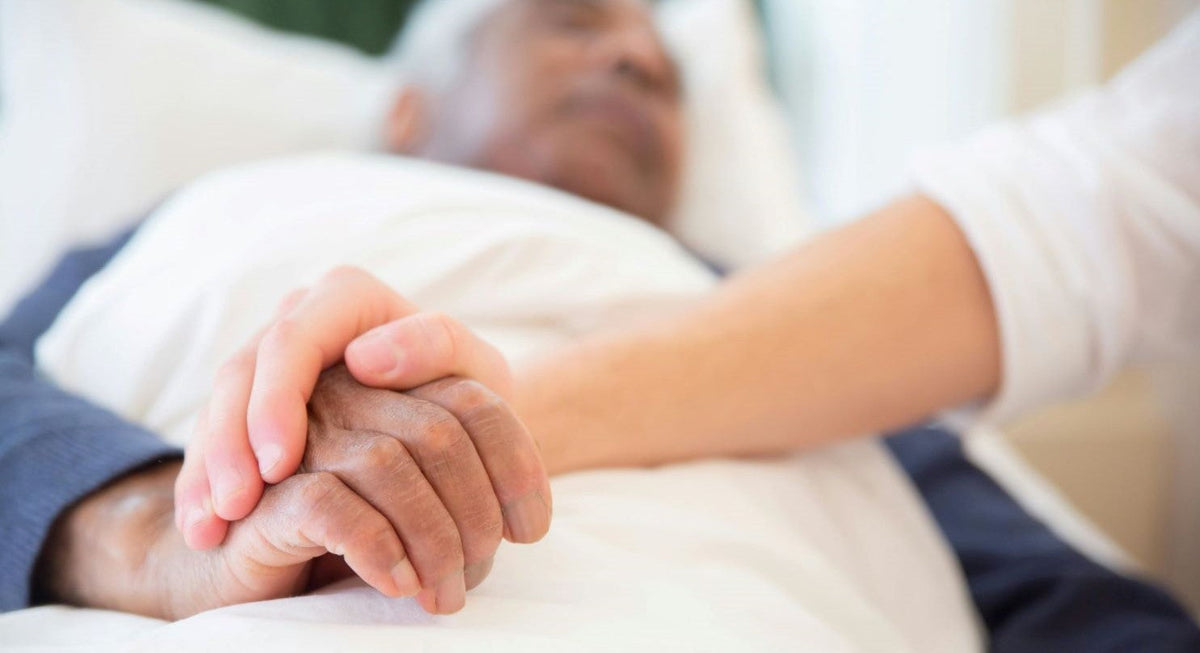
Ressources en soins palliatifs pour les patients et les aidants
Que sont les soins palliatifs ?
Les soins palliatifs constituent une approche globale de la prise en charge des personnes atteintes d'une maladie incurable. Ils visent à soulager la souffrance et à améliorer la qualité de vie en prenant en compte le bien-être physique, émotionnel, psychologique, social et spirituel. Cette approche n'est pas réservée aux personnes en fin de vie ; elle peut également améliorer leur bien-être lorsqu'elle est associée à un traitement.
Les soins palliatifs peuvent varier d'une personne à l'autre et selon le stade de la maladie, mais ils nécessitent presque toujours une équipe. La plupart des équipes soignantes peuvent les prodiguer, ainsi que des spécialistes en soins palliatifs. Pour en savoir plus sur les soins palliatifs, consultez ces sites :
- Gouvernement du Canada
- Les soins palliatifs virtuels au Canada , et 10 mythes à ce sujet
Par où commencer ?
Accès : Accéder au système de santé peut s'avérer complexe. Communiquer avec Santé Ontario à domicile (anciennement Services de soutien aux soins à domicile et communautaires) est la première étape pour vous aider, vous et vos proches, à obtenir les soins adaptés à vos besoins. Un coordonnateur de soins peut être votre principal interlocuteur pour vous guider dans le parcours de soins et l'accès à l'information dans les différents contextes.
Orientation : Toute personne peut orienter un patient. Il suffit de composer le 310-2222 (sans indicatif régional) pour être mis en relation avec votre bureau local. Pour plus d’information sur les services de soins palliatifs offerts, consultez le site Web Santé Ontario à domicile .
Faire face à une maladie grave : consultez cette ressource de The Waiting Room Revolution .
Où puis-je accéder à des services de soins palliatifs dans la région de KFL&A ?
Les soins palliatifs peuvent être dispensés dans de nombreux contextes , notamment à domicile, dans les hôpitaux, les établissements de soins palliatifs, les maisons de soins de longue durée, les résidences pour retraités, les refuges, les foyers de groupe et les cliniques externes.
- Parlez-en à votre médecin traitant . Si vous n’avez pas de médecin ou d’infirmière praticienne, renseignez-vous sur la façon de vous inscrire auprès de Health Care Connect. .
- Communiquez avec votre coordonnateur des soins à domicile d’Ontario Health pour discuter de vos besoins en soins palliatifs et des services ou ressources communautaires supplémentaires qui pourraient vous soutenir, vous et votre aidant naturel. Composez le 310-2222 (aucun indicatif régional requis).
- Si vous êtes patient du Centre de cancérologie du Sud-Est de l'Ontario ou de la clinique d'oncologie de l'Hôpital général de Belleville , vous pouvez demander à votre équipe soignante de vous orienter vers la clinique de soins palliatifs externes, gérée par des médecins et des infirmières spécialisés en soins palliatifs. Le Centre de cancérologie offre également d'autres services de soutien, comme les services de travailleurs sociaux et de diététistes.
- Si vous ou un proche êtes admis à l'hôpital, renseignez-vous sur les services de soins palliatifs disponibles, tels qu'une consultation avec un médecin et/ou une infirmière spécialisée en soins palliatifs.
À mesure que les maladies incurables progressent, il devient plus difficile de se déplacer pour les rendez-vous médicaux. Parlez-en à votre médecin traitant ou à votre coordinateur de soins afin de connaître les options de soins palliatifs, notamment la possibilité pour un médecin ou une infirmière praticienne de vous rendre visite à domicile. Voici d'autres options de soins pour les derniers jours et les dernières semaines de vie :
Les hôpitaux dispensent des soins palliatifs aux patients admis en fin de vie.
- Unité de soins palliatifs de l'hôpital Providence Care
- Centre des sciences de la santé de Kingston (site de l'hôpital général de Kingston)
- Hôpital général du comté de Lennox et Addington
Résidences de soins palliatifs dans l’Est de l’Ontario (admission par l’entremise d’Ontario Health atHome) :
- Hospice Quinte (Belleville)
- Hospice Heart of Hastings (Madoc)
- Hospice North Hastings (Bancroft)
- Hospice Renfrew
- Soins palliatifs à Ottawa
- Hospice de la vallée de Madawaska (Baie de Barry)
- Soins palliatifs Providence - Maison AB Smith
Planification préalable des soins – aider les gens à se préparer à leurs futures décisions en matière de soins de santé
- Planification préalable des soins Ontario
- Planification préalable des soins Canada
- Ministère du Procureur général de l'Ontario - Établir une procuration
Gestion des symptômes
- Lignes directrices de Cancer Care Ontario sur la gestion des symptômes
- Soins palliatifs virtuels canadiens : Symptômes et problèmes de santé et journal des symptômes
Soutien aux aidants (par ordre alphabétique)
- Guide du proche aidant en matière de soins de fin de vie (201 pages, 2019, Saint Lazarus Canada et Association canadienne des soins palliatifs)
- Care Channel par Elizz – ressources gratuites pour les aidants familiaux et communautaires
- Programme de soins palliatifs de Champlain Hospice – Aidants naturels et familles
- Communautés solidaires Kingston
- Hospice Lennox & Addington
- Organisation des aidants naturels de l'Ontario
- Soins palliatifs Providence
- Services communautaires du sud de Frontenac
- La révolution des salles d'attente
Prestations de soins de compassion de l'assurance-emploi
- Gouvernement du Canada : Apprenez-en davantage sur les prestations de compassion de l’assurance-emploi
Décès prévu à domicile
Avec le soutien de votre équipe soignante, il est possible d'organiser un décès à domicile. Demandez à votre médecin ou à votre infirmière praticienne si cette option est envisageable dans votre situation.
- Contactez le programme Ontario Health atHome pour qu'un coordonnateur de soins et/ou une infirmière à domicile travaillent avec vous et votre aidant naturel afin de créer un plan de soins qui permettra une mort naturelle et attendue si cela correspond à vos objectifs.
- Un dossier jaune sera conservé à votre domicile. Il détaille le plan d'intervention et les tâches de votre aidant. Si ce plan est en place, il n'est pas nécessaire d'appeler le 911.
Ressources sur l'aide médicale à mourir (AMM)
Les soins palliatifs et l'aide médicale à mourir sont deux types de soins distincts, mais ils peuvent être complémentaires selon vos objectifs en matière de fin de vie. Les soins palliatifs sont là pour vous soutenir, quels que soient vos choix en fin de vie, y compris l'aide médicale à mourir. Pour plus d'informations sur l'aide médicale à mourir, consultez ces sites :
- Gouvernement de l'Ontario (comprend les coordonnées des personnes-ressources pour la coordination des soins)
- Pont C-14
Dernières semaines et derniers jours
-
À quoi s'attendre (Soins palliatifs virtuels canadiens)
Que faire lorsqu'une personne décède
Soutien en cas de deuil et de perte
- Ressources pour le deuil et le soutien aux personnes endeuillées dans la région de KFL&A : une liste exhaustive d’organismes locaux à but non lucratif, de services de soutien en ligne pour le deuil, y compris des ressources pour les enfants et les peuples autochtones, et plus encore.