Meeting people where they are: Palliative care beyond the clinic
April 17, 2026.
A new report from the FLA OHT and Kingston Community Health Centres shows how partnerships between primary care providers, palliative care specialists and social service organizations are bringing care to the region's most vulnerable people where they are.
Care delivered at the truck
She was living in her truck. She was also dying.
When the system said no because there was no fixed address, no home care, Dr. Adrienne Selbie, a Palliative Care Specialist and Assistant Professor at Queen’s University, did not accept that answer. She kept pushing until someone found a way. A personal support worker, a shelter worker and Dr. Selbie herself started going directly to where the woman seeking care was parked. They brought wound care, supplies and dignity to her front door. Or rather, her front window.
That one story explains why the Improving Equity in Access to Palliative Care Collaborative exists.
For most people, palliative care, the kind of care that focuses on quality of life when someone is seriously sick, only happens at home or in a care setting. But for many people in Kingston, none of those options are available.
Some of them do not have a phone to confirm an appointment. Many others are not even linked to any address to which a nurse can be sent. Getting to a clinic is simply not realistic for many of them. And often, some have a long and painful history with a health-care system that never felt safe to begin with.
The medical workers agree on this: nobody designed the system as it is to fail these people. It just was not built with them in mind. And when someone in that situation reached the end of their life, the gaps became impossible to ignore.
Getting people in the same room
In March 2026, the FLA OHT submitted a report to Healthcare Excellence Canada titled Improving Equity in Access to Palliative Care. The findings are worth paying attention to.
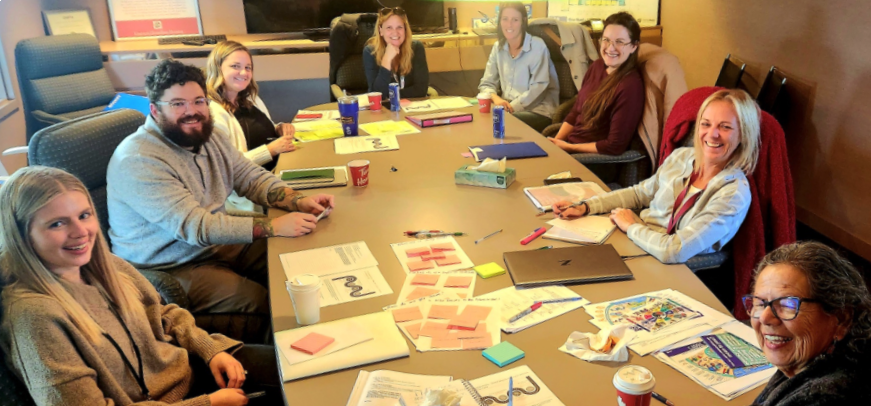
The FLA OHT created the Palliative Care subgroup focused on vulnerably-housed population and brought together people who had never really sat in the same room before: paramedics, palliative care doctors, shelter staff, community organizations and hospice workers. Together, they laid out, step-by-step, what really happens when a vulnerable person gets seriously ill.
What came out of those conversations was concrete. They created a working group so that people from different sectors could share information and talk through difficult cases together. No vulnerable person had to face those barriers alone anymore.
The training that followed went in both directions, and this is particularly interesting. Shelter workers learned to recognize when someone might be getting close to the end of their life and would benefit from an early palliative approach to care. And palliative care doctors, on their side, learned how to properly manage pain for people who use drugs. This might be a little surprising because, apparently, it was something that was too often avoided before, not for medical reasons, but simply because of stigma, according to the report.
In total, 107 people were trained through this initiative, including doctors, community workers, and shelter staff.
There is also something this project brought to the surface that is not talked about enough. According to the participants who responded to this report, the weight this work puts on the people doing it every day is real. Watching someone die without being able to alleviate their pain or get them what they need, that does not just go away. The working group became a space to talk about that honestly, across sectors, and to find solutions together. Without realizing it, the patients were not the only ones who needed support.
When care finally arrived
People started receiving care outside of hospitals, through the new pathways this collaboration made possible. They now had access to a direct referral from a shelter worker to a palliative care team, which simplified the steps in between.
Shawn lived that reality. Serious illness and mental health challenges had followed him for years, and too often, one got in the way of treating the other.
"It seems unfair that physical illness can get worse or not treated because of mental illness. I feel like if I talk about my experience, maybe it can help someone else, or maybe even help change the system."
When the care finally reached him:
"I felt so, so loved going through everything. It helped me feel that life is worth fighting for. I wasn't going to quit because I had so much support."
Not finished yet
The work is not finished. There is still no shared health record connecting all the people involved. Not everyone has access to a family doctor. Stigma has not disappeared.
But something real has been built here. A research partnership with Queen's University will study the impact of this initiative in depth, looking at pain management, quality of care and what actually changed for patients. The goal is to share what worked, not just in Kingston, but with teams across the country facing the same challenges.
One truck, one shelter, one person at a time.