Living Well Together: when community helps design the care it needs
June 19, 2026.
I would gladly do it again in a heartbeat," said Ken Bracey after stepping off the panel at the FLA OHT's Living Well with Heart Failure and COPD event this past April 22. The wordplay was deliberate, but he also meant every word.
Bracey was one of two patient panelists who joined a cardiologist and respirologist for the Living Well Together event, an evening that drew more than 120 people together to learn about managing life with chronic obstructive pulmonary disease (COPD) and heart failure. But before the doors opened, the work of building this event had already begun with members of the community the event was meant to serve.
Designed with the community from the start
The community event brought together patients, caregivers, health-care providers and community organizations with the goal of helping people living with heart failure and COPD feel more informed, more connected and better supported in managing their health..
The project manager, Dendra Hillier, worked closely with the FLA OHT Community Council to plan the event together. The council had a hand in almost every part of the process. For example, council members looked over the promotional materials and asked for easier-to-understand language. Posters were updated, the wording and the tone were adjusted to feel more welcoming, changes the team might not have thought of on their own. Council members also brought up the idea of letting people register by phone, knowing that not everyone is comfortable online. The option was there all along; no one had thought to offer it. "Until the Community Council suggested, we didn't ask the question of who might be able to do this, and it turned out we had an option," said Dendra. That one small change made it easier for people who might otherwise have missed out.
The evening's program also took shape based on what the community said it needed. Patients and doctors shared the same stage because people wanted to hear both sides — not only the clinical facts, but also the real stories from people living with these conditions every day.
Before the event evaluation survey went out to attendees, it was sent to the Community Council first, to make sure the questions reflected what people actually cared about.
By working closely with community members and partners, we were able to create a format that felt authentic, relevant, and grounded in what matters most to those we serve," said Dendra. That approach, she says, shapes how the FLA OHT thinks about future initiatives, including the importance of designing services with the community, not just for them.
What happened on the evening
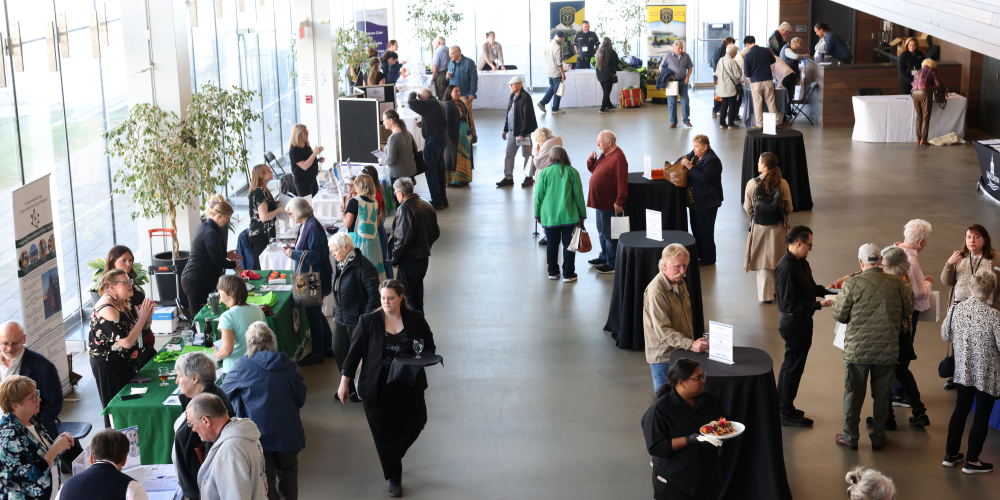
Over 120 people came out on an April evening. The space was filled with a mix of patients, caregivers, clinicians and community service providers. Some came for information, some came to offer it.
The evening opened with a land acknowledgement offered by Theresa MacBeth, the Panel moderator, followed by a moment of gratitude led by Grandmother Kathy Brant. Then came the panel discussion, where Dr. Michael Fitzpatrick and Dr. Aws Almufleh spoke respectively on COPD and heart failure, alongside patient panelists Kerry Stewart and Bracey.
Dr. Fitzpatrick captured the spirit of the initiative plainly, reminding the room that these conditions are not a death sentence: "That's why we're here today, because there's a lot to offer. A lot we can do that can make a big difference. We just have to be consistent. We're trying to work with every caregiver or provider to get the care the patients need wherever they are."
Dr. Almufleh's message was equally clear: staying active, maintaining a heart-healthy lifestyle and taking medications regularly can make a real difference. While heart failure is a serious diagnosis, he reminded the audience, early intervention and prevention will always outperform reactive care.
Stewart, who is living with heart failure, told the room that she has found ways to adapt, modifying her approach, adjusting her lifestyle, and still reaching the goals she set for herself.
For Bracey, living with heart failure has meant building a strong support network: a primary care physician who motivates him, a wife who makes sure he eats properly and keeps up with good habits, and an exercise program he genuinely enjoys.
"All the speakers, especially the patients, provided first-hand information you would be hesitant to ask," one attendee noted afterward.
Beyond the panel, the room was full of conversations. Community service providers and vendors were on hand; from pulmonary rehab and personal fitness to palliative care and respiratory equipment and attendees made connections they had not expected to make. One person discovered new exercise options adapted to their prosthetic leg. Another found out about resources for rural home care. A caregiver left with a clearer sense of what supports might be available as her husband's care needs grow.
What it meant, and what comes next
For Kerry Stewart, who attended as both a participant and a patient advocate, the evening carried a deeper significance rooted in her own history. Seeing Dr. Fitzpatrick and Dr. Almufleh step outside the clinic and into the community that April evening meant something to her. "We've got two outstanding doctors here who are putting themselves out to engage with all of us so that they can understand and continue to improve the system," she said. "That gives me amazing hope for the future."
For Hillier, this was a first, and an honest learning experience as much as a milestone.
What we heard from attendees, partners, and vendors was incredibly encouraging. Early feedback has been overwhelmingly positive, highlighting the value of bringing clinical expertise and lived experience together in one space, creating opportunities for meaningful, real conversations, and making it easier to discover and access local services and supports", she noted.
One of the most impactful elements was the collaborative, co-design approach to this event, she added.
The people who came out that April evening, patients, caregivers, providers, neighbours, showed what is possible when a community comes together around shared health. And the process that brought them there showed what it looks like when community voices help build the table, not just sit at it.